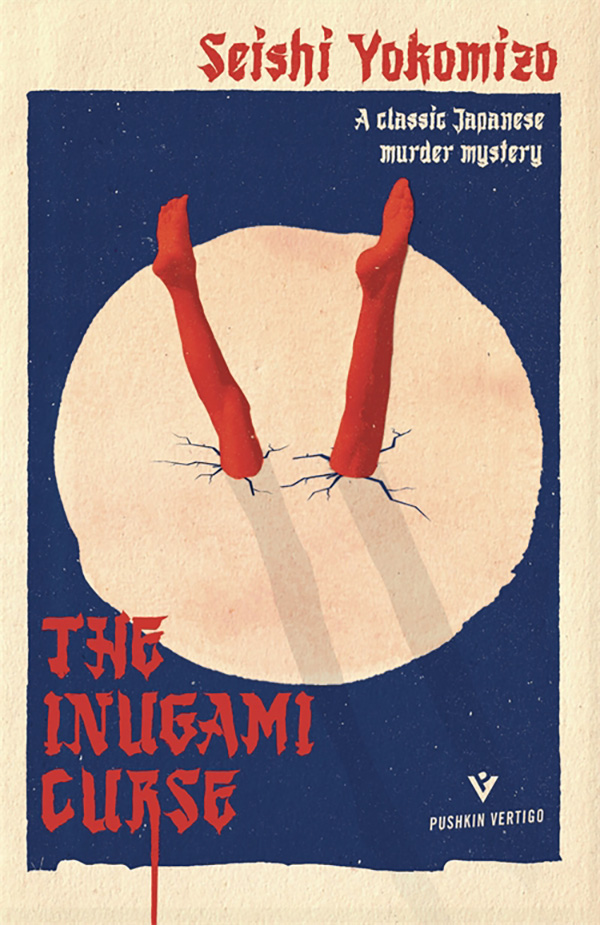
Imagine picking up a mystery book and finding out from the first few pages of the book, it was a Sherlock Holmes story – the ‘DOYLE’ on the spine, registering nothing. That is how far removed the author’s name was for me – from the famous fictional detective, Kindaichi. It was thus a surprise to pick up “The Inugami Curse” and meet the icon himself.
I used to watch the modernized version of the Kindaichi murder mysteries on TV when I was growing up in Japan. Unlike the series which employed a young handsome actor for the role, Kindaichi of the novel is more a Columbo – a middle aged man who stutters and has a terrible habit of scratching his hair when he gets excited. He sleeps in half the day, only to be woken up by the police who calls to report yet another murder. Kindaichi then, flings on his traditional hakama pants and rushes to the scene. On one such occasion, Kindaichi is summoned to ski down the mountain in hot pursuit. The policemen, in Western trousers, voice polite concern for this detective in traditional attire. Even the narrating voice quietly apologizes for its protagonist’s eccentricities. But what would you know, Kindaichi is an excellent skier – not one to be hindered by a mere kimono.
In short, he is disarming, and it is his character that trips up the cunning.
There was something amazingly simple and quaint about the final reveal. Amidst the bureaucratic mess of post war paper trails (literal paper), and quiet village gossip, it feels extremely far removed from the world we live in where a phone contains and sends out daily information of our habits. Yet the famous detective lives on today, updated to flout the new system. Much like in the instance of Sherlock Holmes, some fictional characters find life beyond their books, their names transcending time and ink.
Here I must admit that most of my reading years have gone into cultivating an understanding in Western literature. Only a year ago did I really start appreciating literature of my upbringing. I used to find Japanese writing style abrupt, its author’s offering no assistance to the reader in connecting one thought to the next. In comparison, Western writing is long, lingering, and full of beautiful similes. But! Reading requires practise, much like anything else. I realize now that I was wrong; the Japanese author offers trust – that we, the reader, will find the same eye level, understand the sentiment of the story, without the clutter of symbolic words. I hope to continue reading thoughtfully – expanding the library with many different authors from many places in time and space.
Indeed, Kindaichi was a sight to behold. He took off the Inverness and half-coat that he was wearing over his kimono, and then removed his hakama trousers, pulled up the hem of his kimono, tucked it into his sash, and put on socks and ski boots over his long, knit underdrawers.
‘Mr. Kindaichi, you look –’ Chief Tachibana burst out laughing.
‘Don’t laugh, Chief. Just watch how good I am.’
 JohannaAirth
Leave a comment