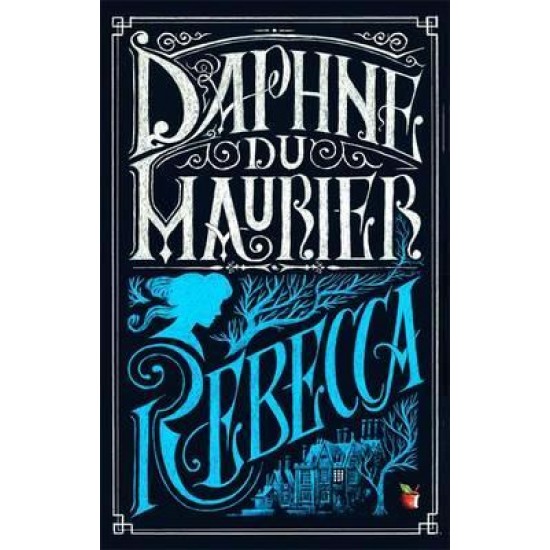
I picked this gem up when I saw the new trailer for what will be its 3rd movie interpretation. Having now read the thriller, I can understand the urge to reproduce it for screen – there is this great sense of downfall, a wonderfully terrifying foreboding of the heroine’s decent into madness. This is even when the story’s first chapter, begins at the end, and we are made aware that the pair have survived their trails. But at what cost!?
The heroine is haunted by the memories of her new husband’s late wife, previous mistress of an enchanting estate. At every page she is being compared to the late wife, and we are at the edge of our reading nooks, wondering when the young girl will snap from the passive aggressive treatment from the household servants and her cold and distant husband. It is, appropriately, very Hitchcockian.
But then it flips! The young and second Mrs. De Winter triumphs. Because Maxim never loved Rebecca. No, no, no! Maxim loves our heroine, and needs her – first for her naiveite and then later for her resolve to stand by her man. She is the meek, kind, woman saviour!
It is rather telling of our societal biases, when in Thomas Hardy’s Tess of the D’Urbervile, written almost 50 years prior to Rebecca, the sweet, mistreated, and financially dependant, Tess, swings for her crime, while the wealthy Maxim gets away for his. Both Hardy and De Maurier’s novels point out biased flaws in our perception of what is ‘fair’ when applied to the two sexes. But we know that now, don’t we?
So it seems an odd choice of drama to remake in the midst of a feminist movement – for to strip the story down, the first wife, Rebecca, is murdered for infidelity. And because she is hateful, because….well…because, she is organized, has exquisite taste, and throws the best parties to deceive people into liking her. In the end, its two women pitted against one another.
We are still being sold old-fashioned-loyal-love on a silver platter; and we still buy it. We don’t bat an eye when our heroine doesn’t turn around and run when she finds out her husband is a murderer. But of course she stands with her man, we say. He LOVES her. Besides, he is Army Hammer.
Is that still the line where women are expected to relinquish their independence? What good did that do Tess? Her husband loved her too – until he found out she was sexually abused, and so left her. And later, after Tess is hanged, he marries her younger sister. L.O.V.E
I adored De Maurier’s delicious descriptions of a flower’s scent, the phantasmagorical details of Manderly, and her writings of the treacherous rolling sea and human heart alike. She is a wonderful writer and I enjoyed reading the novel immensely. But I do hope that one day, the novel won’t be remade with a cheap message of female triumph.
‘…for to me a rhododendron was a homely, domestic thing, strictly conventional, mauve or pink in colour, standing one beside the other in a near round bed. And these were monsters, rearing in the sky, massed like a battalion, too beautiful I thought, too powerful; they were not plants at all.’
 JohannaAirth
Leave a comment