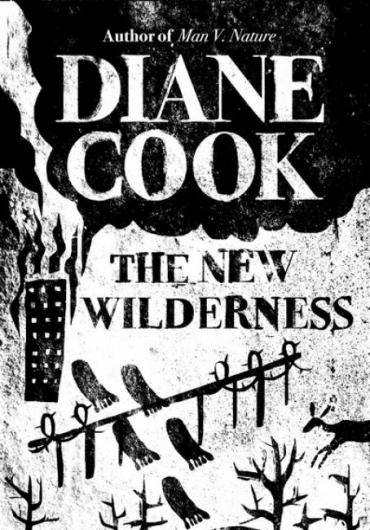
Despite this title being on so many “books of the year” lists and displayed on prime shelves at bookstores, I kept passing on it – until a friend physically handed the book to me. She had a straight-forward, one-line answer to my open-ended question about her thoughts on the book; “It made me wonder what it is like to have a daughter.”
Well, I wonder too…
A small group of people are sent out to live in the wild as what started out as a science experiment, which later turns bureaucratic, political, and social (as most extreme experiments do). While it felt heavy with undeveloped ideas and characters, the heart of the book was just as it was succinctly described by my friend – of the relationship between mothers and daughters.
There are three generations of examples: Gen I, the mother who left the polluted city to the Wilderness experiment, to save her sickly daughter. Gen 0, the mother who was left in the city without daughter and granddaughter. And Gen II, the sickly daughter turned Wilderness leader. Agnes is the ultimate result of the experiment; she is in-tune with nature and looks towards the animals for cues to survive. Her own ideas of love, mating, leadership, come from the logic of animals, which is shown in contrast to her mother’s ideas which is based on a social tribe bound by stories.
At first, there was a natural tendency to build a tribe around one alpha male. The women would pay him in sexual favours to get the less tedious duties or more fattier meat portions for their children. The children, however, chose a leader based on merit (ie. who would lead them through to survival), regardless of gender, strength, or age. For this new generation, having a child is about passing on instinct and genetic code. They are independent from social stories of “mum guilt” and “sacrifice” because every decision is made based on the sole purpose of maximum survival.
I turn to mothers here: have we not confused ‘maternal instincts’ with ‘sacrifice’ and use those words interchangeably? Have we not filled our emotional plates with fluff – with empty carbs of guilt and artificial sweeteners of social pressure? It only serves to bloat our hearts. ‘Mum guilt’ is an idea made up by our own kind, by human mothers, and has been perpetuated through cultural stories. You are mother, not martyr.
We, of this civilization, are unburdened of such hard-wired survival instincts. Even with a raging pandemic, we are still not instinctive to its dangers. ‘When will life resume’, we ask, with impatience, for we have faith in medicine. Such loss of fear is the gift of civilization. But taking away instinct has strangely reduced the preciousness of life.
Remember to be joyous and unburden your plate. Be kind to yourself. We do what we can.
Happy Mother’s Day.
“They had seen a lot of death. They had become hardened to it. Not just the Community members who had perished in grisly or mundane ways. But around them everything dies openly. Dying was as common as living. They worried about one another, of course, but when one of them ceased surviving for whatever reason, they closed ranks and put their energy into what remained alive. This was an unanticipated outcome of living in the Wilderness.”
“Agnes became to see the map as a story rather than a piece of truth. Something that changed based on what their needs where. It wasn’t something to orient their lives to. It was a suggestion rather than a directive. They didn’t have to follow it. Did they realize that? She noted the location of the sun in the sky and turned in a circle, peering at each slice of land in front of her. She could name the places they’d been that lay in each direction. Corroborating it with the map, she was right each time. They had senses. So why did they still use a map that lost them as often as it oriented them?”
 JohannaAirth
Leave a comment